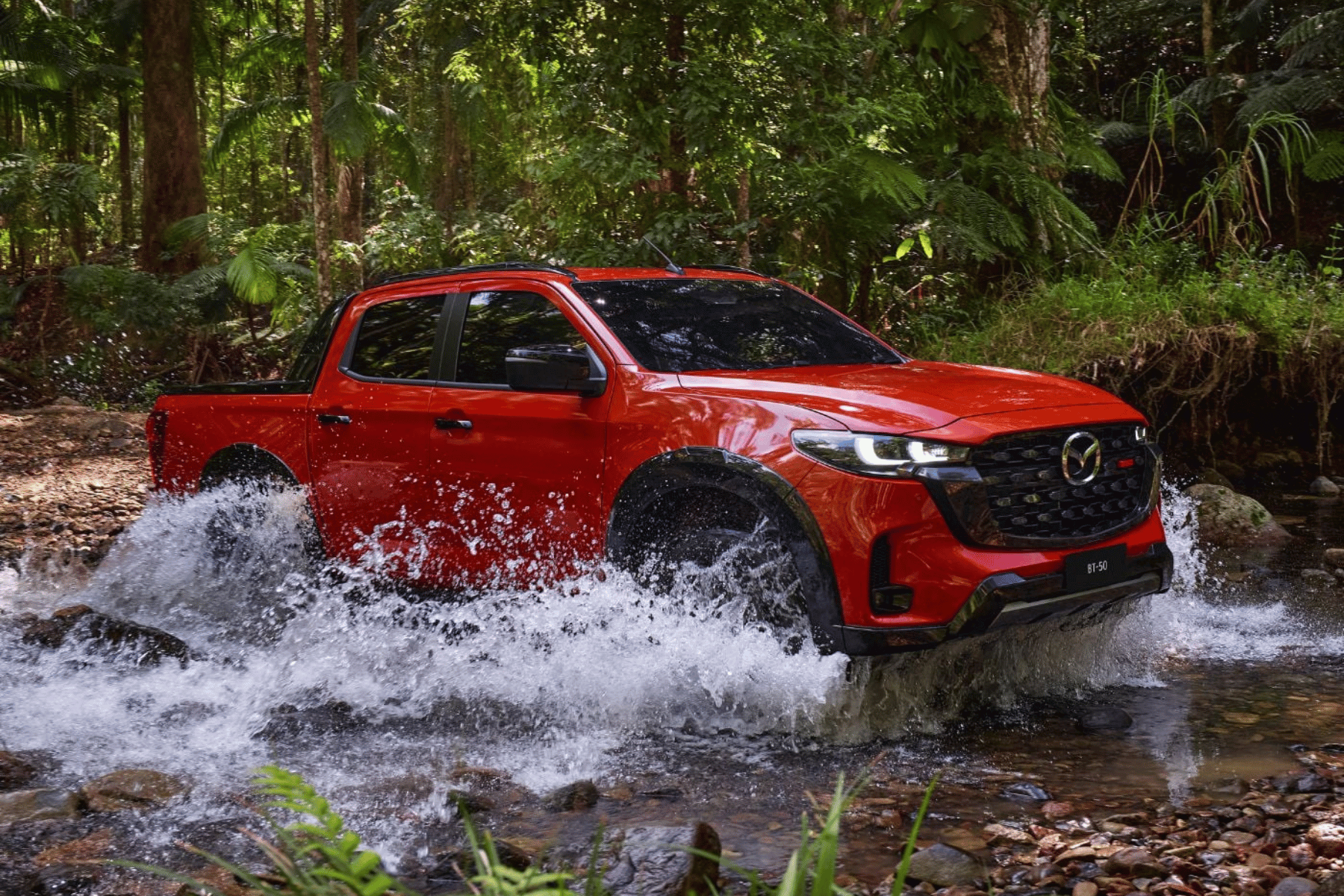
The 2026 Mazda BT-50 is a capable dual-cab ute that combines a comfortable cabin with strong towing ability, practical storage and a choice of turbo-diesel engines.
For 2026, Mazda has expanded the BT-50 range with the introduction of the new Boss and the return of the popular Thunder, giving buyers even more choice.
But how does the BT-50 stack up against Australia’s other popular utes, and which version should you choose?
Here’s everything you need to know about the 2026 Mazda BT-50.
2026 Mazda BT-50: Quick review
Motor Scout rating: 8.5/10
Best for: Buyers looking for a comfortable ute that can handle work and everyday driving.
Engine pick: 3.0-litre turbo-diesel
Biggest strengths: Comfort, towing capability and practicality
Biggest weakness: Higher-spec variants become expensive
Towing capacity: Up to 3.5 tonnes
Engines: 2.2-litre and 3.0-litre turbo-diesel
2026 Mazda BT-50: What’s new?
The BT-50 gets several updates for 2026.
The biggest news is the return of the BT-50 Thunder, which sits at the top of the range. It comes with the 3.0-litre turbo-diesel engine, four-wheel drive and six-speed automatic transmission.
The Thunder adds a bull bar, Lightforce driving lights, reinforced side steps, a steel sports bar and manual roller tonneau cover, giving it a more rugged look straight from the showroom.
There’s also a new BT-50 Boss, positioned between the XT and XTR. Based on the 3.0-litre 4×4 dual-cab, it adds features including a black sports bar, tub liner, side steps and black exterior trim.
Another useful upgrade is the addition of a 360-degree camera to XTR, GT and SP grades, making the BT-50 easier to manoeuvre in tight spaces and potentially more useful when parking or tackling off-road terrain.
The 2.2-litre turbo-diesel engine also remains available, giving buyers a more economical alternative to the larger 3.0-litre diesel.
How much does the 2026 Mazda BT-50 cost?
The 2026 Mazda BT-50 range starts from around $38,400 before on-road costs, with the range-topping Thunder priced at around $78,400 before on-road costs.
Pricing varies depending on the body style, engine and specification you choose.
For most buyers, the dual-cab models are likely to be the main attraction, with the range offering everything from practical work-focused variants through to high-spec models designed for both work and lifestyle use.
Mazda has also introduced the new BT-50 Boss, which gives buyers another option for a well-equipped 3.0-litre 4×4 dual-cab.
As with any new car purchase, it’s worth comparing drive-away prices across dealers rather than focusing solely on the manufacturer’s list price.
Mazda BT-50 engines and performance
There are two diesel engines available in the 2026 BT-50.
The 2.2-litre four-cylinder turbo-diesel produces 120kW of power and 400Nm of torque. It’s paired with an eight-speed automatic transmission and is available in selected 4×2 and 4×4 configurations.
The larger 3.0-litre four-cylinder turbo-diesel produces 140kW and 450Nm, with a six-speed automatic transmission.
For buyers who regularly tow, carry heavy loads or spend time off-road, the 3.0-litre is likely to be the more appealing choice.
The BT-50 can tow up to 3.5 tonnes, while maximum payload is up to 1.2 tonnes, depending on configuration.
2.2L vs 3.0L: Which BT-50 engine should you choose?
The 2.2-litre makes the most sense if your BT-50 will primarily be used as a daily driver, work vehicle or family ute and you don’t regularly need maximum towing or payload capacity.
It also has the advantage of an eight-speed automatic and lower claimed fuel consumption.
The 3.0-litre is the better option if you’re buying the BT-50 specifically for towing, off-road driving or heavier-duty work.
With 450Nm on tap, it provides more pulling power and is the engine used in the higher-spec Boss, XTR, GT, SP and Thunder variants.
Mazda BT-50 fuel economy
Fuel consumption varies depending on the engine, body style and drivetrain.
Mazda’s claimed combined fuel consumption figures for the BT-50 range sit at around 6.6–7.8L/100km, depending on configuration.
The 2.2-litre is the more economical choice, while the 3.0-litre offers additional performance and towing capability.
Real-world fuel consumption will vary depending on how much weight you’re carrying, whether you’re towing, driving conditions and how often you use four-wheel drive.
If fuel economy is a priority, the 2.2-litre is worth considering. If towing and performance are more important, we’d choose the 3.0-litre.
Mazda BT-50 towing capacity and payload
If you’re buying a ute for towing, the BT-50 deserves a place on your shortlist.
The BT-50 offers up to 3.5 tonnes of braked towing capacity, depending on configuration, while maximum payload is up to 1.2 tonnes.
That makes it suitable for towing everything from boats and caravans to trailers and work equipment.
It’s important to check the towing and payload specifications of the exact BT-50 variant you’re considering, as these figures can vary depending on configuration and accessories.
What’s the Mazda BT-50 like inside?
The BT-50’s cabin is one of its strengths.
Rather than feeling like a purely work-focused ute, higher-spec versions offer a more polished interior with features designed to make the vehicle comfortable as a daily driver.
Depending on the grade, equipment includes leather-appointed finishes, heated seats and additional driver assistance technology.
The BT-50 also gets a 9.0-inch infotainment display, with smartphone connectivity including Apple CarPlay and Android Auto available in the range.
The result is a ute that can comfortably pull double duty as a work vehicle during the week and family car on the weekend.
Mazda BT-50 technology and safety
Safety remains an important part of the BT-50 package.
Higher-spec variants benefit from a range of driver assistance technologies, while the 2026 updates make the ute even easier to use.
The addition of a 360-degree camera to XTR, GT and SP grades is particularly useful for a vehicle of this size.
Depending on specification, the BT-50 also offers features such as adaptive cruise control, reverse camera and smartphone connectivity.
The BT-50 carries a five-star ANCAP safety rating, although buyers should check the rating’s applicability to the specific variant and model year they’re considering.
What is the BT-50 Thunder?
The BT-50 Thunder is the flagship of the 2026 range and is aimed at buyers who want a ute with a more adventurous look straight from the showroom.
It comes with the 3.0-litre diesel, 4×4 and six-speed automatic as standard.
The exterior upgrades include:
- Single-hoop bull bar
- Lightforce driving lights
- Reinforced side steps
- Steel sports bar
- Manual roller tonneau cover
- Thunder-specific styling
It’s priced from around $78,400 before on-road costs, making it a significant step up from the Boss.
For buyers who want the extra equipment and tougher styling, the Thunder is an attractive package. But if you’re primarily looking for value, the Boss could be the more interesting option.
What is the BT-50 Boss?
The BT-50 Boss is a new variant for 2026 and could be one of the more interesting additions to the range.
It uses the 3.0-litre turbo-diesel engine with four-wheel drive and is designed to offer some of the visual and practical upgrades buyers might otherwise add as accessories.
It gets black exterior styling, a sports bar, tub liner and side steps.
For buyers who want a well-equipped dual-cab without stepping all the way up to the Thunder, the Boss is worth considering.
2026 Mazda BT-50: Pros and cons
Pros
Comfortable daily driver
The BT-50 is more than just a work ute, with a cabin that’s comfortable enough for everyday family use.
Strong 3.0-litre diesel
The 140kW/450Nm engine provides plenty of grunt for towing and carrying heavier loads.
3.5-tonne towing capacity
The BT-50 is capable of towing a substantial load when correctly configured.
Good range of variants
From basic work-focused chassis models through to the high-spec Thunder, there’s a BT-50 for a broad range of buyers.
New Boss and returning Thunder
The two 2026 additions give buyers more choice, particularly if they want a more heavily equipped dual-cab.
Cons
Higher-spec models aren’t cheap
Once you move into higher specifications, the BT-50 becomes a significant investment.
Six-speed automatic in the 3.0L
The larger engine uses a six-speed automatic, while the smaller 2.2-litre gets an eight-speed.
Strong competition
The Ranger, HiLux and D-MAX are all well-established choices in the Australian ute market.
Mazda BT-50 vs the competition
The BT-50 sits in one of Australia’s most competitive vehicle segments.
Mazda BT-50 vs Ford Ranger
The Ford Ranger is one of the biggest names in Australia’s ute market and is the obvious benchmark for the BT-50.
The Ranger offers a broader range of engines and variants, while the BT-50 keeps things relatively simple with two four-cylinder diesel engines.
The Mazda’s appeal is its combination of comfort, styling and practicality, while the Ranger has the advantage when it comes to sheer range and choice.
If you’re shopping for a new ute, it’s worth comparing both before making a decision.
Mazda BT-50 vs Isuzu D-MAX
The BT-50 and Isuzu D-MAX are particularly close competitors, sharing a platform and many mechanical components.
The D-MAX has built a strong reputation as a practical workhorse, while Mazda has taken a slightly more lifestyle-focused approach to the BT-50.
For buyers who spend equal amounts of time commuting and working, the BT-50’s interior and styling may give it the edge.
Mazda BT-50 vs Toyota HiLux
The Toyota HiLux remains one of the most established names in the Australian ute market.
The HiLux has a strong reputation for durability and resale value, while the BT-50 offers an alternative for buyers who want something a little less conventional.
As always, the best choice will depend on how you intend to use the vehicle, how much you’re towing and which variant represents the best value.
Is the 2026 Mazda BT-50 worth buying?
The 2026 Mazda BT-50 is a strong all-rounder in Australia’s competitive ute market.
It isn’t trying to reinvent the dual-cab ute. Instead, Mazda has focused on giving buyers a capable, comfortable and practical vehicle, while expanding the range with the new Boss and returning Thunder.
The 3.0-litre diesel is the pick for buyers who need serious towing and off-road capability, while the 2.2-litre is an appealing option for buyers who want better efficiency and don’t need the extra grunt.
The biggest consideration is price. Once you move into the upper end of the BT-50 range, you’re spending serious money and have plenty of strong alternatives to consider.
But if you want a ute that can handle work during the week, family duties on the weekend and a bit of off-road adventure when the opportunity comes up, the 2026 Mazda BT-50 deserves to be on your shortlist.
Motor Scout verdict
8.5/10
The 2026 Mazda BT-50 is a well-rounded ute that strikes a good balance between workhorse capability and everyday comfort.
The new Boss adds an interesting option for buyers looking for a well-equipped 4×4 dual-cab, while the returning Thunder gives buyers a factory-equipped option for those who want something tougher.
It’s not necessarily the first ute we’d tell everyone to buy — but it’s definitely one we’d recommend comparing before making a decision.
Thinking about buying a Mazda BT-50? Motor Scout can negotiate competitive drive-away quotes from our nationwide dealer network, so you can compare your options without having to negotiate with dealerships yourself.